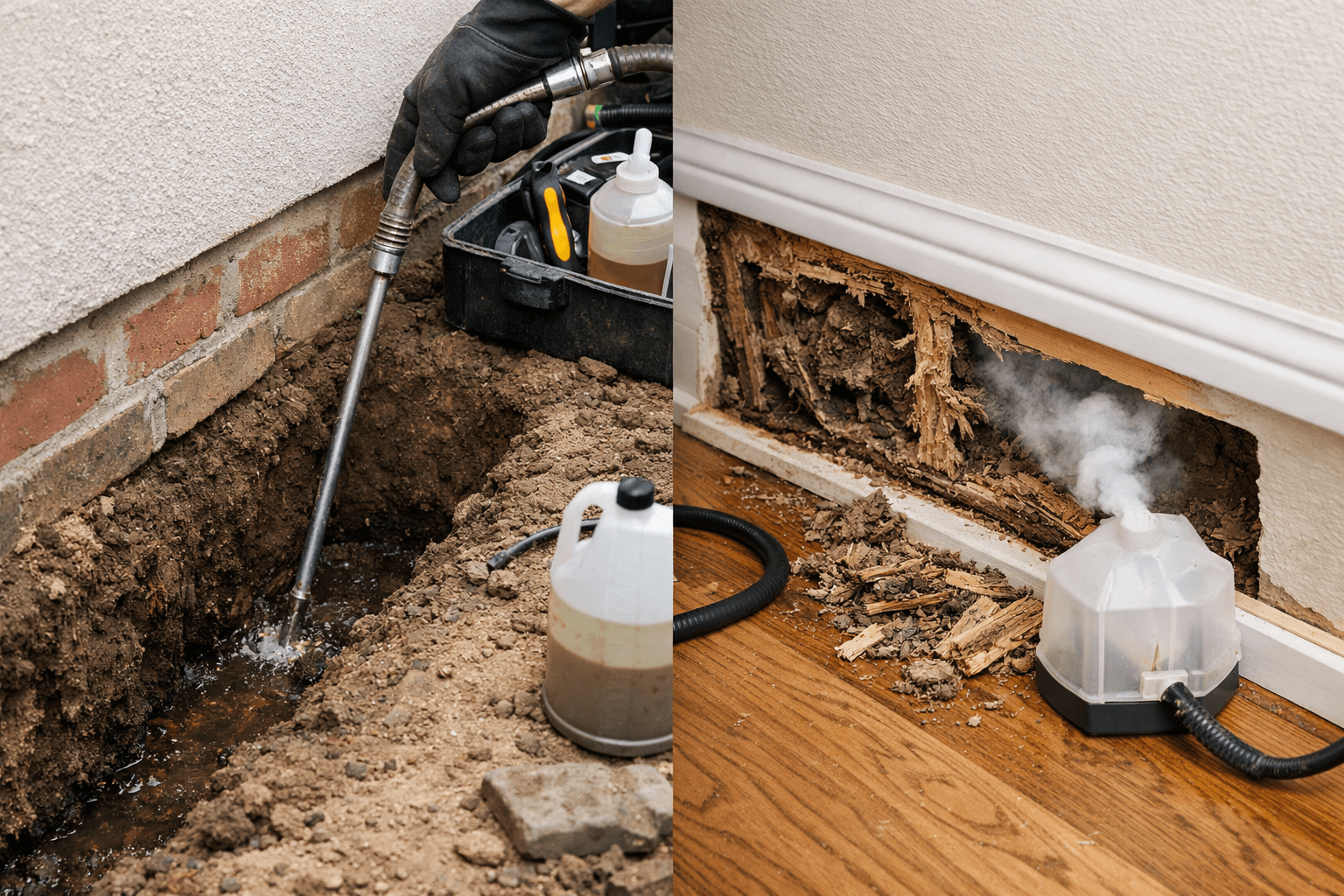
Learn what happens during a termite inspection in Sewell, NJ. A licensed technician checks your foundation, crawl space, and attic in 30-60 minutes, then provides a written report with no obligation.
What happens during a termite inspection in Sewell, NJ?
A termite inspection in Sewell typically takes 30 to 60 minutes. A licensed technician walks your home's interior and exterior, checking the foundation, crawl space, attic, and any wood-to-soil contact points. You get a written report at the end detailing any signs of activity, damage, or conditions that attract termites — with no obligation to book treatment.
Is a free termite inspection actually free, or will I get pressured into buying something?
At A-Altair Termite and Pest Control, the inspection is completely free and comes with zero commitment. You'll get an honest assessment and a written estimate if treatment is recommended — then the decision is entirely yours. There's no hard sell, no surprise invoice, and no travel surcharge for Sewell or Washington Township homeowners.
How do I know if I actually need a termite inspection, or if I'm overreacting to something?
If you've spotted mud tubes along your foundation, hollow-sounding wood, discarded wings near window sills, or bubbling paint that looks like water damage, a termite inspection is the right call — not an overreaction. Subterranean termites are common throughout Gloucester County's soil, and catching them early is the difference between a simple treatment and a costly repair job.
This guide walks Sewell and Washington Township homeowners through exactly what to expect when you schedule a free inspection with A-Altair — from the phone call to the written report. No mystery, no pressure, just clarity.
Why Sewell and Washington Township Homes Are Particularly Vulnerable
Gloucester County sits on clay-heavy, moisture-retaining soil — ideal conditions for Eastern subterranean termites, the most destructive species in New Jersey. Homes along the older neighborhoods in Sewell and Washington Township often have wood framing close to grade, crawl spaces with limited ventilation, and deck footings that create direct wood-to-soil contact. All of that is termite territory.
According to the Penn State Extension, subterranean termites cause more structural damage in the U.S. than fire and storms combined — averaging over $5 billion in damage annually. New Jersey homes are squarely in their range. Getting inspected once a year, especially if you haven't had one recently, is just smart ownership.
What Does the Inspection Actually Look Like, Step by Step?
Here's the honest walkthrough — no fluff.
Your Free Inspection: What Happens at Each Stage
- Phone call: You call the Sewell line at (856) 728-2101. We ask a few quick questions — home age, any signs you've noticed, crawl space or slab foundation — and set a time that works for you, including same-day availability.
- Exterior walk: The technician checks your foundation perimeter for mud tubes, damaged wood siding, soil contact with structural wood, and moisture conditions near the house.
- Interior check: We inspect the basement or crawl space, garage framing, door frames, window sills, and any areas where wood meets concrete or soil. We tap and probe to check for hollow damage.
- Attic (if accessible): Roof framing and rafters get a visual check for drywood termite evidence — frass (termite droppings), blistered wood, and exit holes.
- Written report: At the end, you get a clear summary of what was found — or not found. If there's activity, we explain exactly what type, where it is, and what treatment makes sense.
- Written estimate (if needed): If treatment is recommended, you receive a written quote before any work begins. The number you see is the number you pay — no travel charges, no add-ons.
The whole visit usually runs 45 minutes for a standard single-family home. Larger properties or homes with extensive crawl spaces may take a bit longer.
What Are Technicians Actually Looking For?
A trained eye catches things most homeowners walk past every day. Our NJ state licensed technicians look for:
- Mud tubes — pencil-thin tunnels of soil and termite saliva running up your foundation wall or across a floor joist. These are the clearest sign of subterranean activity.
- Swarm evidence — discarded wings near window sills or doors, usually after a spring swarm. Termites shed wings immediately after finding a new nest site.
- Frass — tiny pellets that look like coarse sawdust, a telltale sign of drywood termites, which are less common here but do show up in older Sewell homes.
- Hollow or damaged wood — wood that sounds papery when tapped or crumbles easily when probed is a red flag even without visible insects.
- High-risk conditions — mulch piled against the foundation, wood debris in crawl spaces, poor drainage near the sill plate. Even without active termites, these conditions earn a flag in the report.
Finding any of these doesn't mean your house is falling down. It means you caught something early — exactly what the inspection is designed to do.
Subterranean vs. Drywood Termites: What's the Difference?
| Factor | Subterranean | Drywood |
|---|---|---|
| Where they live | Underground, enter through soil | Inside the wood itself |
| Most common sign | Mud tubes on foundation | Frass (pellet droppings) |
| Common in South Jersey? | Very common | Less common, but present |
| Treatment | Liquid barrier or bait stations | Localized or whole-structure treatment |
- Where they live: Subterranean termites nest underground; drywood termites live inside the wood they're eating.
- Most common sign: Mud tubes for subterranean; frass pellets for drywood.
- Prevalence: Subterranean are by far the more common threat in Gloucester County; drywood termites are less frequent but still found in older homes.
- Treatment approach: Different species need different methods — another reason a proper inspection matters before any treatment starts.
If you want a deeper look at treatment options across the region, the Termite Control Camden County Guide covers both species in detail.
What Happens If Termites Are Found?
The inspection report will clearly identify the species, the location of activity, and the extent of damage or risk. From there, we walk you through your treatment options — liquid soil barrier, bait stations, or localized treatment for drywood infestations — and give you a written estimate. No work begins until you've seen the number in writing and agreed to it.
If there's structural damage from termites, A-Altair also handles Termite Control and repair work, so you're not left coordinating between multiple contractors. One call handles the whole problem.
And if the inspection turns up nothing? That's genuinely good news — and it cost you nothing to find out. Ready to check a few more prevention basics before you book? The Stop Termites Camden County Checklist is a quick read that covers what homeowners can do to reduce risk year-round.
How Often Should Sewell Homeowners Get a Termite Inspection?
The U.S. Environmental Protection Agency recommends annual termite inspections for most homeowners, especially in high-risk regions like New Jersey. If your home hasn't been inspected in more than a year — or ever — that's the first thing to fix. Termites don't wait, and neither should you.
A-Altair offers Termite Control services throughout Gloucester and Camden counties, with no travel surcharges inside the service area. You pay exactly what you're quoted — nothing more.
Frequently Asked Questions
Do I need to do anything to prepare my home before the inspection?
Not much. Clear access to your crawl space hatch, attic entry, and the perimeter of your foundation — including moving stored items away from the walls in your basement or garage. The technician needs a clear path to probe and inspect. Other than that, your home can stay exactly as it is. The whole prep takes about five minutes.
Will the inspector move furniture or open walls?
No. A termite inspection is non-invasive. The technician visually examines and probes accessible surfaces — they won't move appliances, cut drywall, or dig up landscaping. If activity is found in a concealed area, the written report will note what follow-up access may be needed for treatment, and that's a separate conversation with your approval.
How long does it take to get results or a treatment quote?
You'll have the findings before the technician leaves your property. The written report and, if applicable, a treatment estimate are provided the same day. There's no waiting a week for lab results — termite evidence is identified visually on-site by a licensed technician who can tell you what's there and what to do about it in plain language.
What if I'm buying or selling a home in Sewell — do I need a separate WDI report?
Yes. Real estate transactions in New Jersey typically require a Wood-Destroying Insect (WDI) report, which is a formal inspection document accepted by lenders and title companies. A-Altair provides WDI inspections as part of the process. Call the Sewell line at (856) 728-2101 to confirm availability and timing around your closing date.
Can termites come back after treatment, and what's covered if they do?
Termites can attempt to re-establish, which is why A-Altair backs every treatment with a 100% satisfaction guarantee — if pests return between scheduled treatments, we retreat at no additional charge. Annual inspections after treatment are the best way to catch any new activity early and keep your warranty protection in place.
Ready to find out exactly what's going on under your foundation? Call A-Altair's Sewell line at (856) 728-2101 — or reach us at (856) 768-9263 — to schedule your free termite inspection, no commitment required. We're available Monday through Friday, 8 a.m. to 5 p.m., with emergency call-outs when you can't wait.
A-Altair Termite and Pest Control, Inc.
Licensed pest control professionals serving Camden, Burlington, Gloucester, and Atlantic counties, NJ.
(856) 768-9263