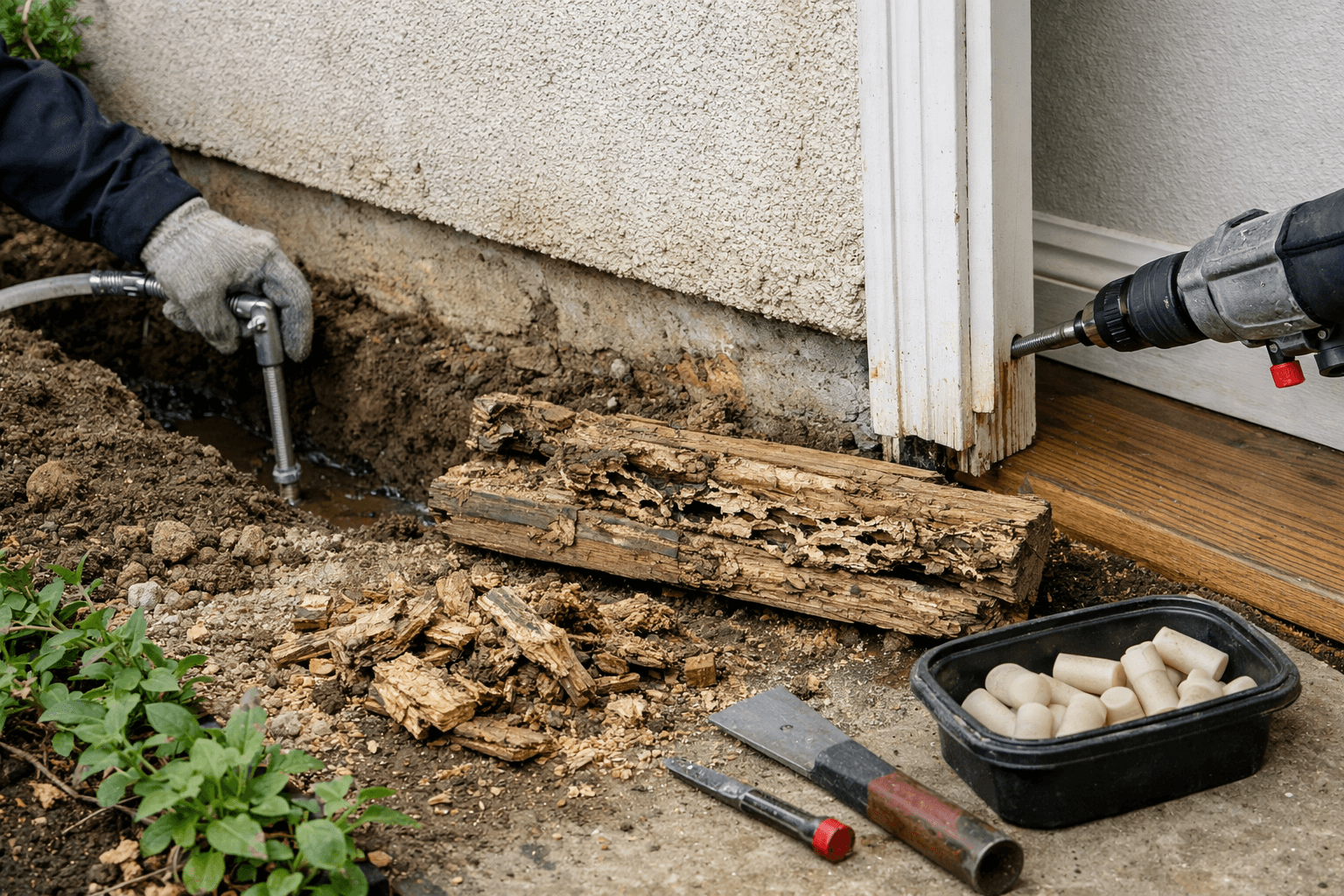
Learn why ticks remain active in Burlington County this fall and how barrier treatments protect your yard from Lyme disease risk before winter.
Are ticks still active in Burlington County in the fall?
Yes — ticks in Burlington County remain active well into fall, and in some cases through early winter. The black-legged tick (also called the deer tick) stays active whenever temperatures hold above freezing. Wooded areas in towns like Medford, Mount Holly, and Evesham are prime habitat, and the risk of tick bites — including exposure to Lyme disease — doesn't drop just because summer is over.
What is a barrier tick treatment and does it actually work?
A barrier treatment is a targeted application of EPA-registered product along the edges of your yard — fence lines, wood piles, leaf beds, and the border where lawn meets woods or brush. It works by creating a treated zone ticks must cross to reach your family or pets. When applied by a licensed technician at the right time of season, barrier treatments significantly reduce tick populations in treated areas, according to research published by the Centers for Disease Control and Prevention.
How do I know if my Burlington County yard has a tick problem?
If you've found a tick on yourself, a child, or a pet after being in your yard, you already have a problem. Burlington County's wooded neighborhoods, trail-adjacent properties, and areas near the Pinelands are especially prone to high tick pressure. You don't need to see ticks crawling to have them — deer, mice, and other wildlife carry them in constantly. A free yard inspection is the fastest way to know what you're dealing with.
Fall is the season most South Jersey homeowners let their guard down on ticks, and it's exactly when black-legged ticks are most dangerous. This piece covers why fall tick activity in Burlington County is a real concern, what barrier treatments do, when to schedule service, and what to expect from a professional tick control program.
If you're finding ticks on your family or pets in October or November, the problem isn't winding down — it's peaking. Deer ticks are most aggressive in fall when they're searching for a final blood meal before the cold sets in. That window of feeding activity coincides exactly with kids playing outside, dogs roaming the yard, and families enjoying the last warm weekends of the year.
Fall Tick Control: What to Do Right Now
- Schedule a professional barrier treatment before temperatures drop below 40°F consistently
- Clear leaf litter, brush piles, and wood stacks from yard edges — ticks shelter there
- Keep grass mowed short, especially along fence lines and property borders
- Check pets after every outing and use vet-recommended tick prevention year-round
- Have a licensed technician identify high-risk zones in your specific yard
- Ask about a seasonal maintenance plan to carry protection through spring
You can take most of those steps this weekend. But the barrier treatment is the one that actually reduces the tick population on your property — not just your exposure to them. Mosquito Control programs from A-Altair also include tick coverage in many seasonal plans, so ask about bundling when you call.
Why is Burlington County tick pressure so high in wooded neighborhoods?
Burlington County sits at the edge of the New Jersey Pinelands, and that geography matters. Sandy, wooded soil supports large deer populations and the white-footed mice that ticks depend on for their larval and nymph stages. Towns like Medford Lakes, Evesham, Marlton, and Hainesport have exactly the mix of mature trees, leaf cover, and wildlife corridors that make tick populations explode.
According to the New Jersey Department of Health, New Jersey consistently ranks among the highest-risk states in the country for Lyme disease, with Burlington County among the more heavily affected counties. That's not a statistic to sit on — it's a reason to act before the season ends.
Tick pressure in fall is also driven by rodent activity. Mice are the primary host for black-legged tick larvae and nymphs, and fall is when mice move toward homes and outbuildings for warmth. If you have a rodent issue alongside ticks, that's a combined problem worth addressing together. Our Rodent Control services can help break that cycle — fewer mice means fewer ticks completing their life cycle near your home.
What does a professional tick barrier treatment include?
A professional barrier treatment isn't a single spray and goodbye. A trained technician walks your property first, identifying the specific zones where ticks are most likely staging — wooded borders, overgrown edges, shaded mulch beds, stone walls, and areas with deer or wildlife traffic. Those zones get treated with targeted product application.
At A-Altair Termite and Pest Control, Inc, our NJ state licensed technicians handle every treatment. We're fully insured, and we provide a written estimate before any work starts. The quote you get is the quote you pay — no travel surcharges, no surprise line items added after the fact.
- Property walkthrough: identify tick harborage zones specific to your yard
- Targeted application: product applied along borders, beds, and brush edges — not broadcast over the whole lawn
- Timing: fall treatments target nymphs and adult ticks before they overwinter
- Follow-up: our 100% satisfaction guarantee means we retreat for free if ticks return between scheduled visits
For homes near the Pinelands or on larger wooded lots in Burlington County, we typically recommend a seasonal program rather than a one-time treatment. One application helps. A program protects.
One-Time Treatment vs. Seasonal Program
| Factor | Seasonal Program | One-Time Treatment |
|---|---|---|
| Coverage window | Spring through fall, multiple treatments | Single season window |
| Wildlife re-introduction | Retreats address ticks carried in by deer/mice | No follow-up as new ticks arrive |
| Best for | Wooded lots, Pinelands-adjacent, families with kids/pets | Low-pressure yards, minimal wildlife traffic |
| Guarantee | Retreat included between scheduled visits | Limited to single application |
- Coverage window: seasonal program covers spring through fall with multiple treatments — vs. a single application window
- Wildlife re-introduction: program retreats as deer and mice carry new ticks in — vs. no follow-up
- Best fit: wooded or Pinelands-adjacent lots need a program — one-time works for low-pressure yards
- Guarantee: seasonal program includes retreat between visits — one-time treatment does not
When should Burlington County homeowners schedule fall tick treatment?
The window is September through November. Once you're seeing consistent overnight temperatures below 35–40°F, adult tick activity starts to drop. But between Labor Day and Thanksgiving, adult deer ticks are actively questing — climbing tall grass and brush edges and waiting to attach to a host.
Don't wait until you pull a tick off your dog in November and realize the season is nearly done. Schedule before mid-October for the most effective fall treatment. Same-day service is available for Burlington County homeowners who need to move fast.
If you want a broader view of seasonal pest patterns across the county, our Pest Control Tips Burlington County resource covers what's active when and how to stay ahead of it year-round. And if you're dealing with more than ticks — ants in the basement, mice in the walls, or a pest issue in a commercial property — our full Pest Control services cover it all under one roof.
With 20+ years serving South Jersey, A-Altair has handled tick season in Burlington County neighborhoods from Marlton to Mount Laurel to Medford. We know how these wooded communities tick (pun intended), and we know what works here.
Frequently Asked Questions
Do ticks really stay active through the fall in South Jersey?
Yes. Black-legged ticks (deer ticks) remain active in South Jersey through fall and into early winter, as long as temperatures stay above freezing. Burlington County's wooded areas and Pinelands-adjacent neighborhoods see sustained tick activity through November. Fall is actually a high-risk period because adult ticks are actively seeking a final blood meal before winter, making late-season barrier treatments genuinely important — not optional.
How long does a tick barrier treatment take to work?
Most professional barrier treatments begin reducing tick activity within 24–48 hours of application. Dry time and product activation vary by product and weather conditions — your technician will advise on re-entry timing. For best results, schedule treatment when dry weather is forecasted for at least 24 hours post-application. A licensed technician can walk you through the specific product being used and what to expect.
Is tick treatment safe for kids and pets after it dries?
Yes — once the treated areas are fully dry, the yard is safe for children and pets. A-Altair's technicians use EPA-registered products and will give you a clear re-entry window before treatment begins. You'll know exactly when it's safe to let kids and animals back out. If you have specific concerns about product selection, ask during your free inspection — we're happy to walk through options.
Can I just buy tick spray at the hardware store and do it myself?
Consumer tick sprays offer limited coverage and require precise application to targeted zones to be effective. Without a property walkthrough to identify harborage areas, you're likely missing the spots where ticks actually concentrate — shaded borders, leaf beds, brush edges. A licensed technician applies the right product, at the right concentration, in the right places. It's a meaningful difference in results, especially on wooded Burlington County lots.
Does A-Altair serve the whole Burlington County area, not just a few towns?
Yes — A-Altair Termite and Pest Control, Inc serves all of Burlington County, including Mount Laurel, Marlton, Medford, Evesham, Hainesport, Mount Holly, Moorestown, and many more communities. There are no travel surcharges in our listed service area — the quote you receive is what you pay. Call (856) 768-9263 Monday through Friday, 8–5, or reach the Hammonton line at 609-561-6649. Emergency call-outs are available when you need help fast.
Ready to protect your yard before tick season peaks? Call A-Altair Termite and Pest Control, Inc at (856) 768-9263 to schedule your free inspection — no commitment, no pressure, just a straight answer about what's in your yard and what it takes to fix it. Cherry Hill homeowners can reach us at 856-424-5646; Sewell at 856-728-2101; Hammonton at 609-561-6649. We're here Monday through Friday, 8 to 5, with emergency call-outs available when you can't wait.
A-Altair Termite and Pest Control, Inc.
Licensed pest control professionals serving Camden, Burlington, Gloucester, and Atlantic counties, NJ.
(856) 768-9263